The Challenge:
As Clifford Chance began planning its relocation to 2 Manhattan West, the firm recognized the need for a clear technology roadmap that extended beyond traditional conferencing and meeting room design. The goal was to understand how smart building technologies could meaningfully improve day-to-day work while supporting broader organizational principles around efficiency, social responsibility, and adaptability.
The firm was navigating a shift toward more flexible and hybrid ways of working, requiring spaces and systems that could scale, evolve, and remain intuitive over time. Existing challenges included limited visibility into how technology could support time management, difficulty scaling solutions consistently, and a desire to create a more connected workplace experience for partners, associates, staff, and clients alike. Clifford Chance sought a strategy that could unify these needs within a single, coherent framework rather than relying on isolated technology decisions.
The Approach:
TAD led a series of collaborative workshops with Clifford Chance stakeholders across real estate and technology to define what an ideal work experience should look like for different personas, from summer clerks to senior leadership and visiting clients. These sessions grounded the project in the firm’s corporate values and helped surface shared priorities, pain points, and opportunities for impact.
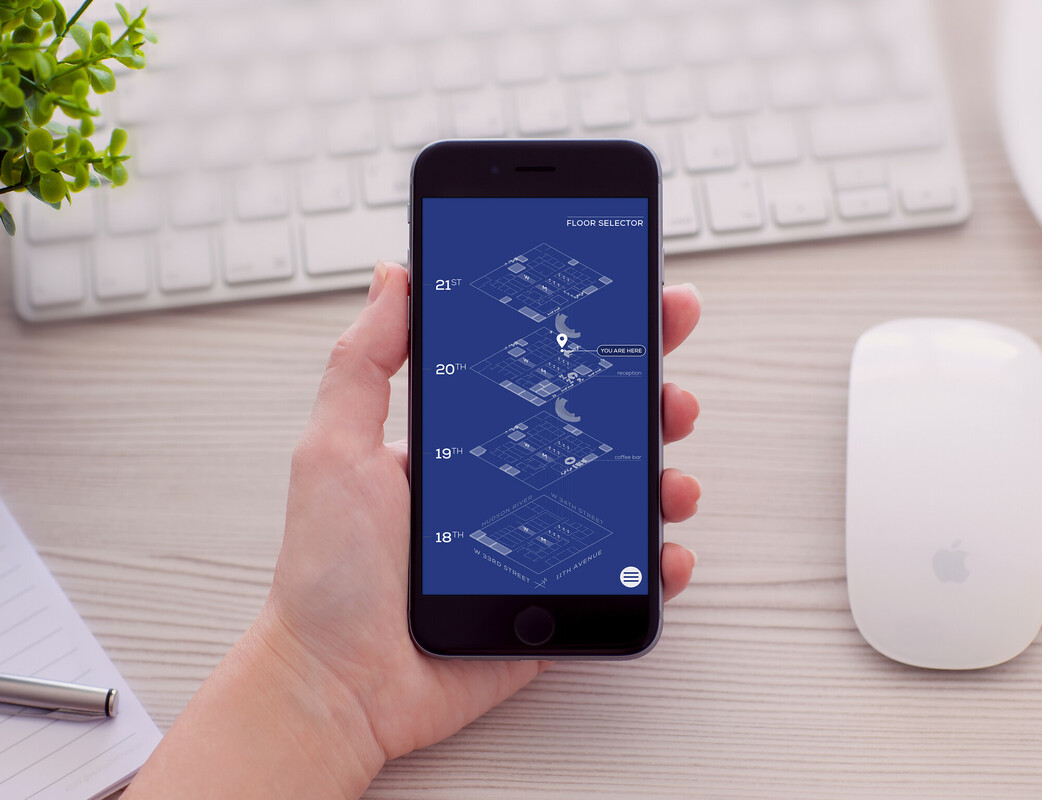
From this discovery process, TAD synthesized goals and mapped them against potential smart building technologies. By analyzing dependencies and interconnections between solutions, we identified the technologies that could deliver the greatest value across multiple objectives. This systems-level thinking allowed us to frame the project not as a collection of tools, but as an integrated architecture designed to evolve with the firm’s needs.
What made the project unique was its emphasis on long-term strategy rather than short-term implementation. The outcome was a clear, defensible framework that could guide decision making throughout design, construction, and future expansion.
The Solution:
TAD proposed a smart building architecture anchored by nine core components that offered the highest impact and strongest interdependencies. These components included elements such as a centralized data lakehouse, sensor strategy, building management system integration, and a visitor management platform. For each component, TAD developed performance specifications, benchmarked industry-leading vendors, and created custom evaluation criteria to support competitive bidding and partner selection.
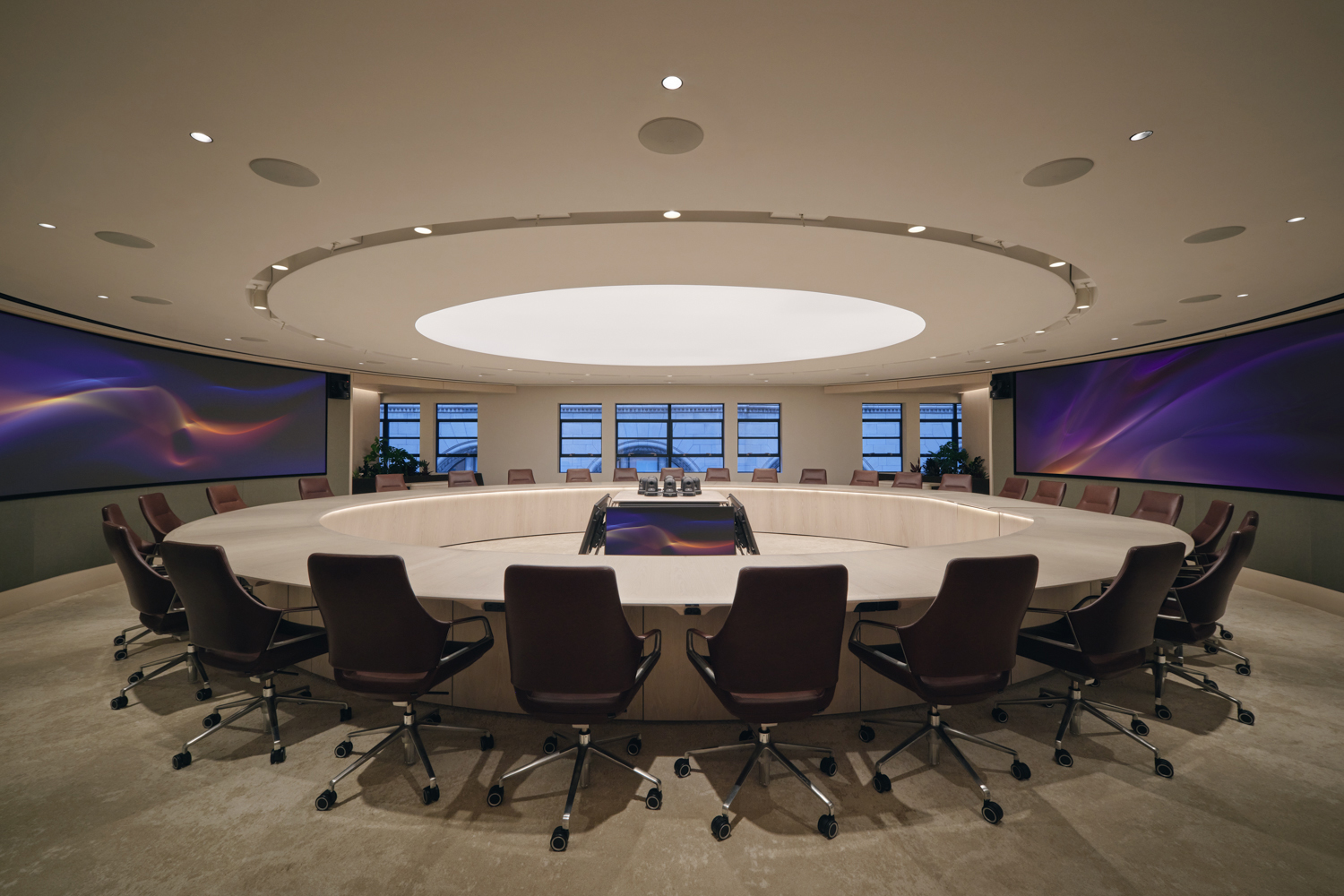
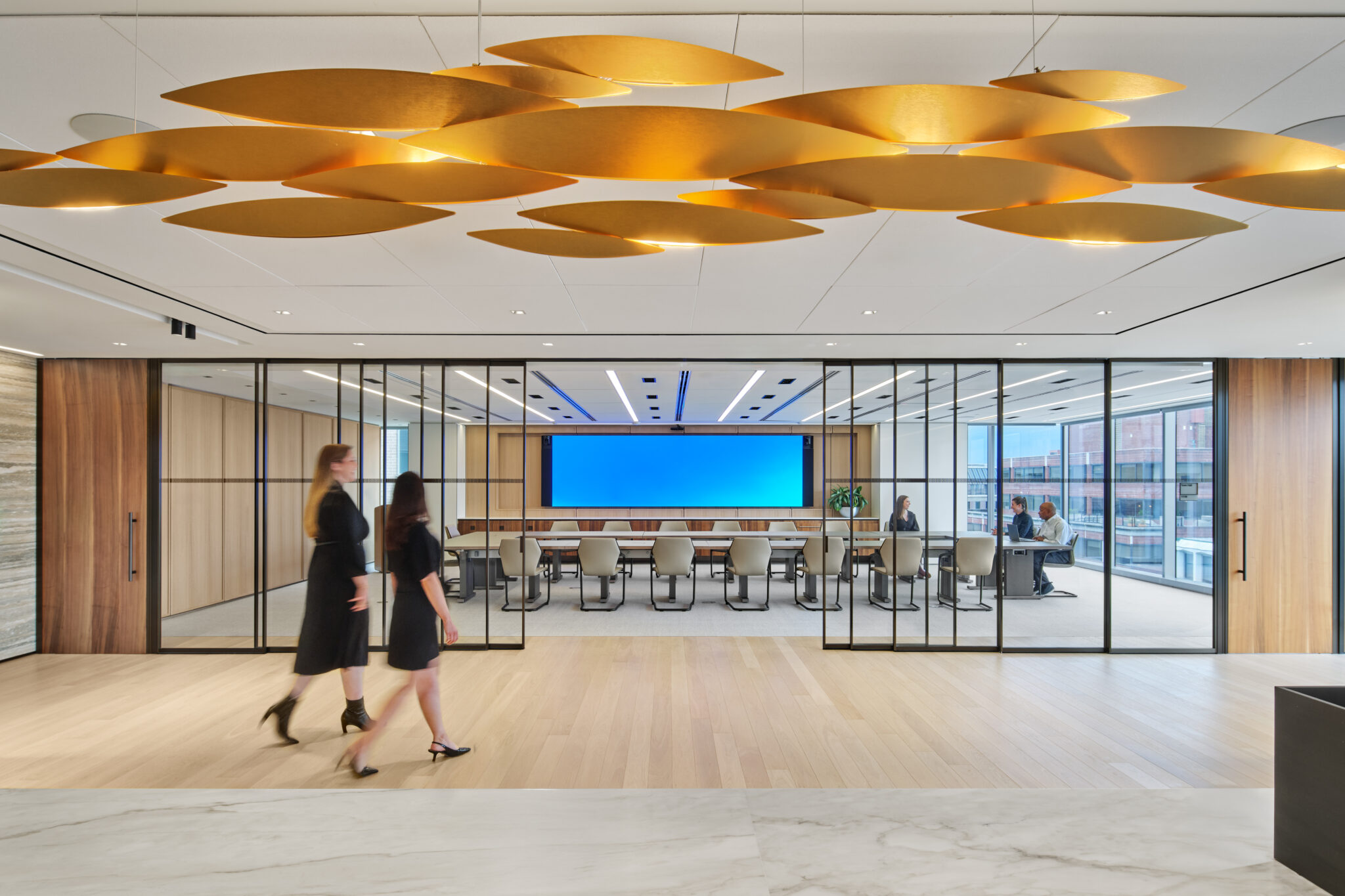
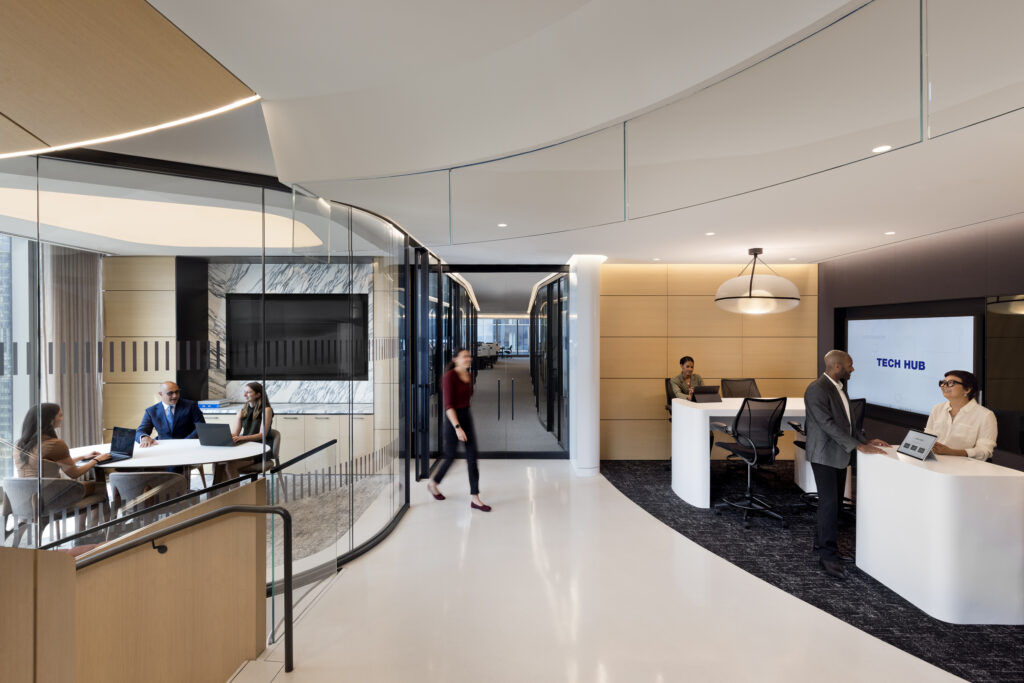
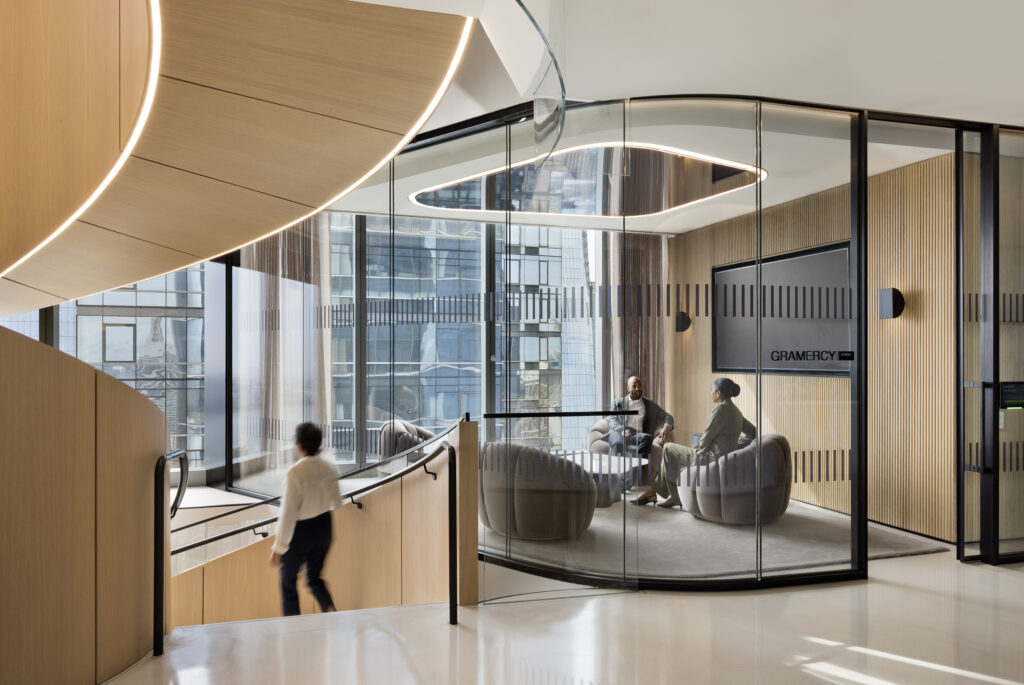
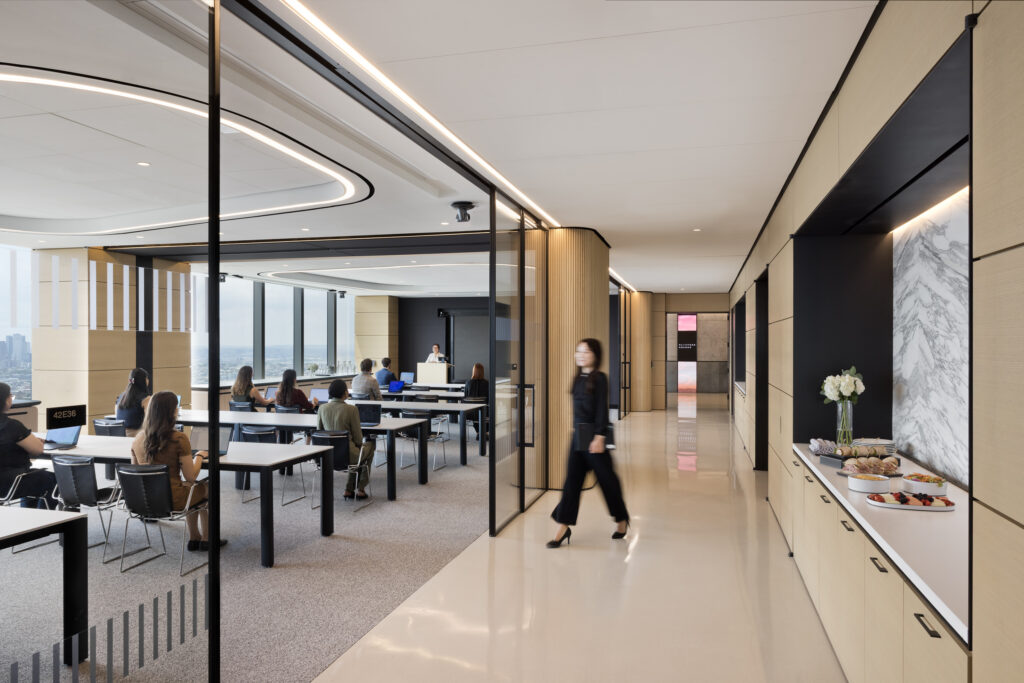
Following this strategic phase, Clifford Chance engaged an MSI to integrate the smart building components, with KODE Labs selected as the central platform. Building on this foundation, TAD continued its involvement through audiovisual design, translating the smart building strategy into consistent, user-facing workplace experiences. Standard conferencing environments were updated to support Webex, Microsoft Teams, and Zoom, alongside the design of a three-way divisible multipurpose space with panoramic views of Manhattan and New Jersey. Together, these systems support a cohesive, future-ready environment that aligns operational intelligence with intuitive collaboration.
The Impact:
The New York headquarters now benefits from smart building systems designed to improve individual productivity, simplify operations, and strengthen collaboration across teams. Technology adoption increased as systems became more intuitive and aligned with real workflows, and the workplace saw a measurable rise in the use of collaborative spaces.
The success of the New York project led Clifford Chance to engage TAD in developing global smart building standards across its 3 million square foot portfolio spanning 33 offices in 28 countries. Building on the same strategic framework, TAD defined a scalable set of technologies guided by three core principles: the Efficient Machine, the Empowered Self, and the Engaged Community. This approach allows each office to deploy smart building solutions at any stage of a capital project while respecting local conditions and constraints.
Through this partnership, Clifford Chance now has a clear, repeatable roadmap to modernize its workplace technology globally, grounded in informed strategy and designed to adapt alongside the firm’s evolving business needs.