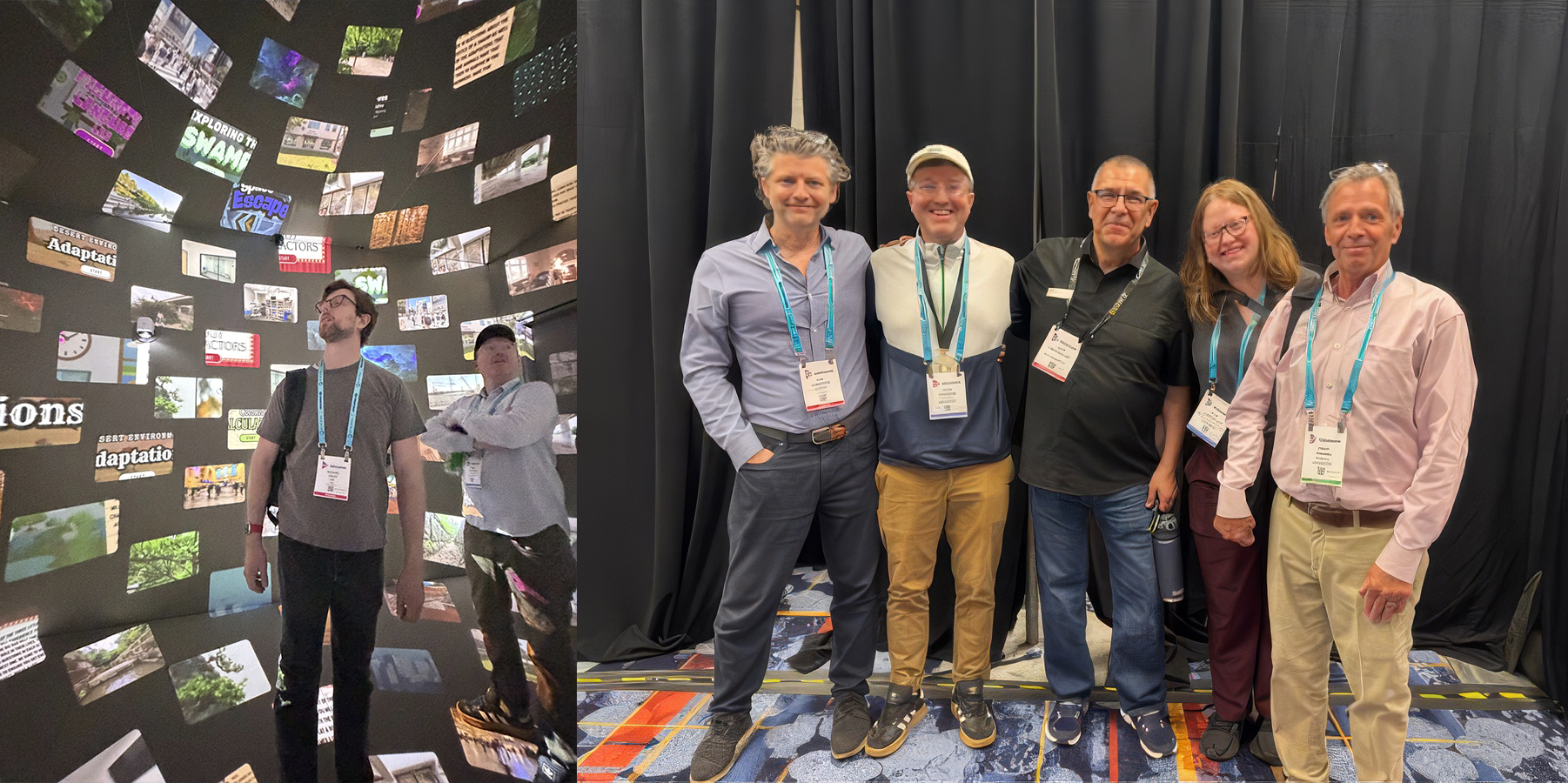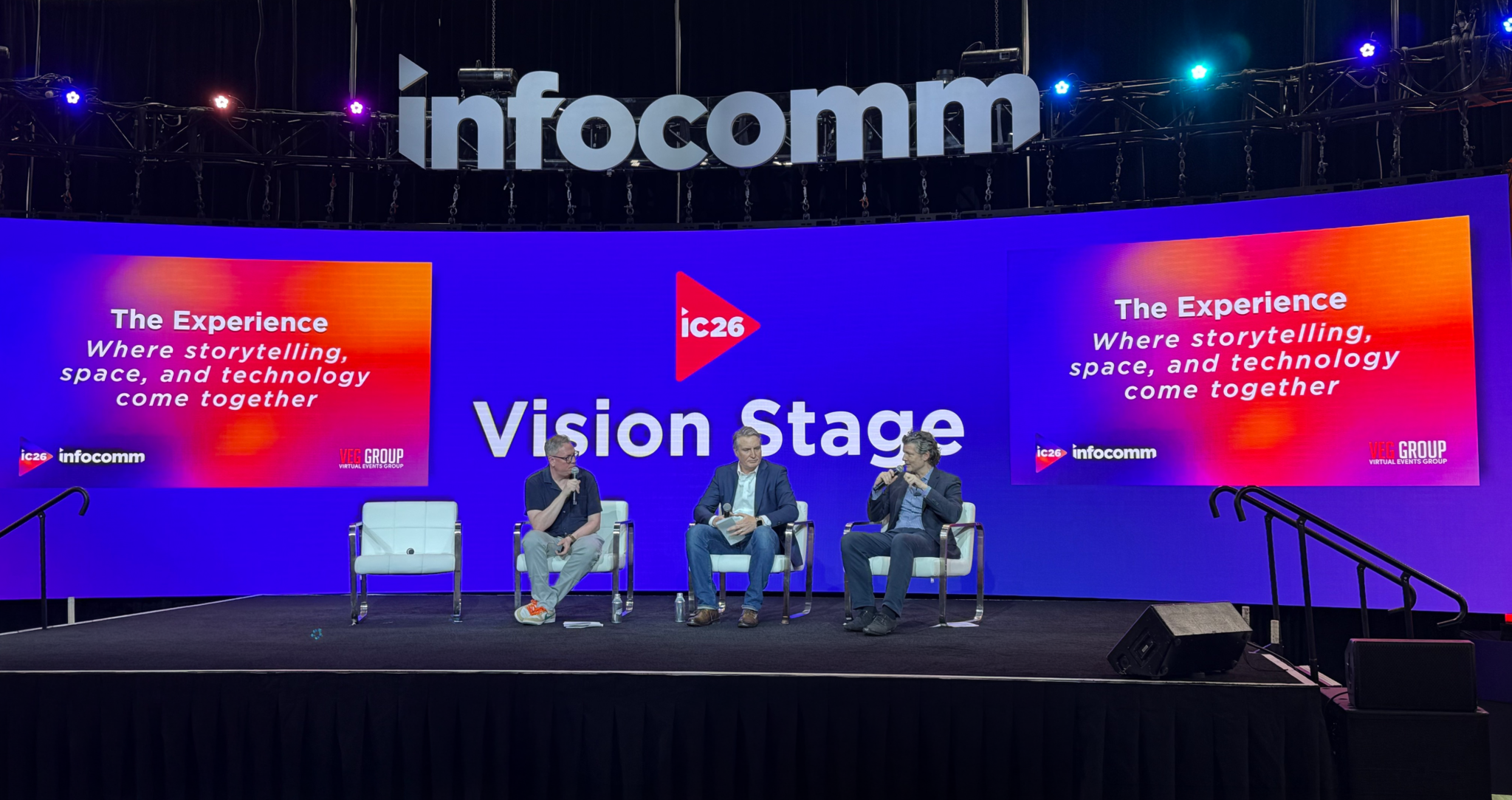
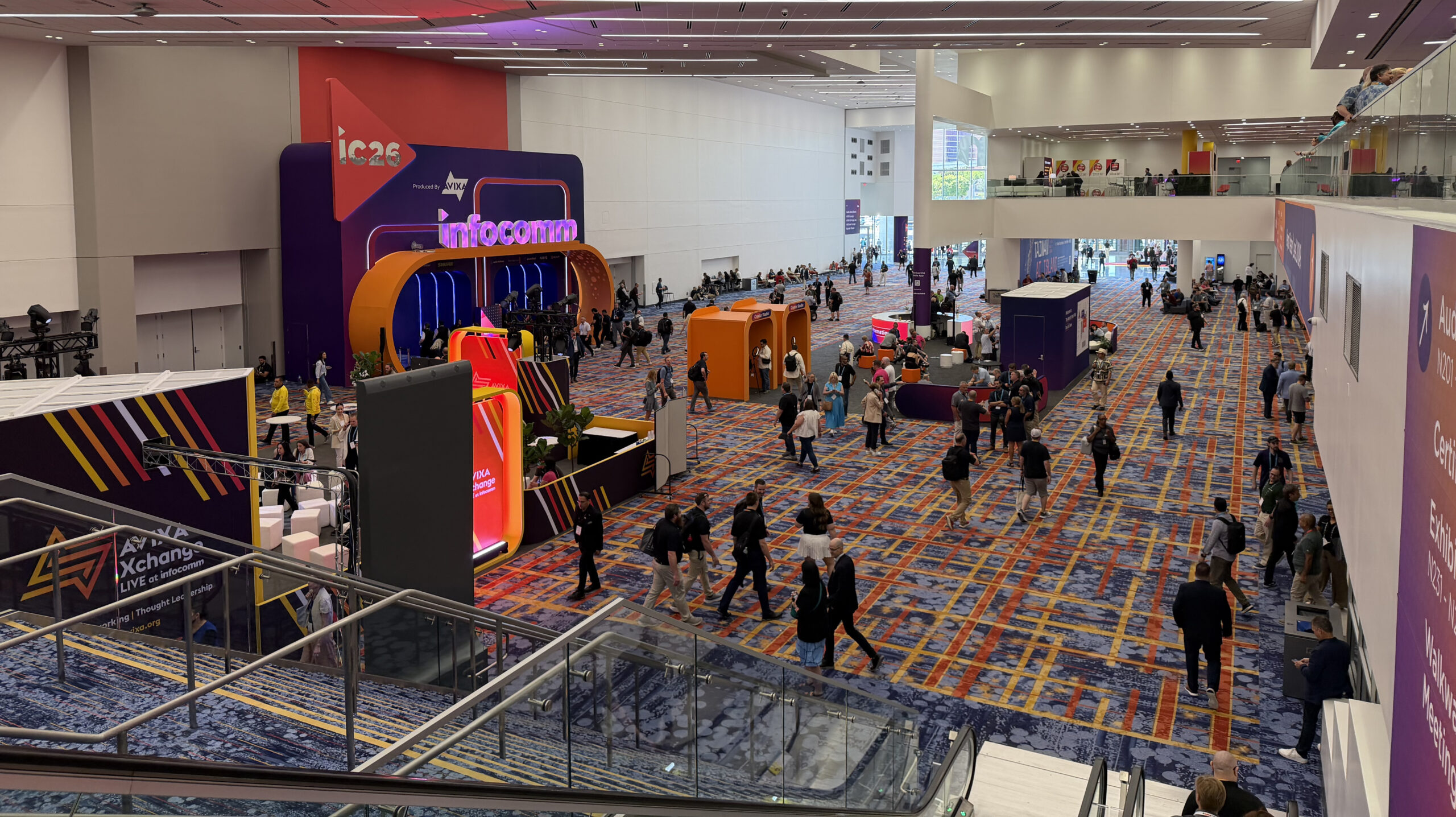
InfoComm 2026 felt less like a showcase of new technology and more like a confirmation that the industry has entered its next chapter.
Between speaking in sessions, meeting with partners, and exploring the show floor, one theme emerged again and again: the question is no longer “Does it connect seamlessly across systems?” It is “Does it work together intelligently at scale?”
That evolution was one of our biggest takeaways from last year’s show. This year, we saw the industry begin to deliver on that promise. AI has moved beyond experimentation into deployment. Platform-agnostic ecosystems are gaining momentum. Workplace strategy is becoming inseparable from technology strategy. Success is no longer measured by the capabilities of individual products, but by how seamlessly systems work together to create better experiences.
The trends below reflect where that transformation is taking shape.
1. AI Cameras: Intelligence Needs Personality
AI-powered camera tracking has matured rapidly and the need has evolved beyond simply keeping a presenter in frame. The expectation has shifted toward producing the right shot at the right moment.
As hybrid meetings become the norm, organizations increasingly expect broadcast-quality experiences that feel intentional rather than automated. Today’s systems still have room to grow. Most rely on generic AI decisions with little opportunity to tailor behavior.
Our Perspective
The next evolution isn’t better tracking, it’s customization. Organizations should be able to define a consistent visual style that reflects their brand and meeting culture instead of relying on a one-size-fits-all AI model.
2. AI Content Should Amplify Designers, Not Replace Them
Generative AI was everywhere at InfoComm, but one message became increasingly clear: the most valuable applications aren’t replacing creativity, they’re removing repetitive work. Current platforms can generate content quickly, but they often struggle with the details that matter, resizing assets, adapting layouts, maintaining brand consistency, and refining messaging.
Our Perspective
The biggest opportunity isn’t asking AI to create the final product, it is using AI to eliminate production work so designers can spend more time thinking strategically and creating meaningful experiences.
3. Partnerships Are Becoming the Product
One of the strongest themes across the show was collaboration.
Manufacturers are increasingly recognizing that customers don’t want isolated technologies, they want solutions that work together seamlessly. This was evident in partnerships around standards like IPMX, AIMS, APIs, and MDEP, as well as collaborations including:
- BrightSign with LG, Sharp, Philips, and Bluefin
- Cisco and Microsoft advancing MDEP
- Microsoft partnering with AVIXA on training
- Leon Speakers collaborating with Gensler
These collaborations are signals that interoperability is becoming a competitive advantage, which goes beyond the notion of an isolated announcement.
Our Perspective
The strongest ecosystems won’t come from companies trying to do everything themselves but from organizations that focus on what they do best while partnering with others who complement those strengths.
4. MDEP: A Bigger Ecosystem, with Important Distinctions
Microsoft’s continued expansion of the Microsoft Device Ecosystem Platform (MDEP) lowers the barrier for Android-based Teams Rooms devices and opens the platform to more manufacturers This is a growth that is good for the industry as more choice typically drives more innovation.
However, broader adoption shouldn’t be confused with identical experiences. Windows and Android deployments still differ in capabilities, flexibility, and long-term functionality.
Our Perspective
As ecosystems expand, transparency becomes just as important as compatibility. Customers deserve to understand the trade-offs so they can make informed decisions rather than assuming every deployment offers the same experience.
AI Doesn't Replace Creativity. It Removes Friction.
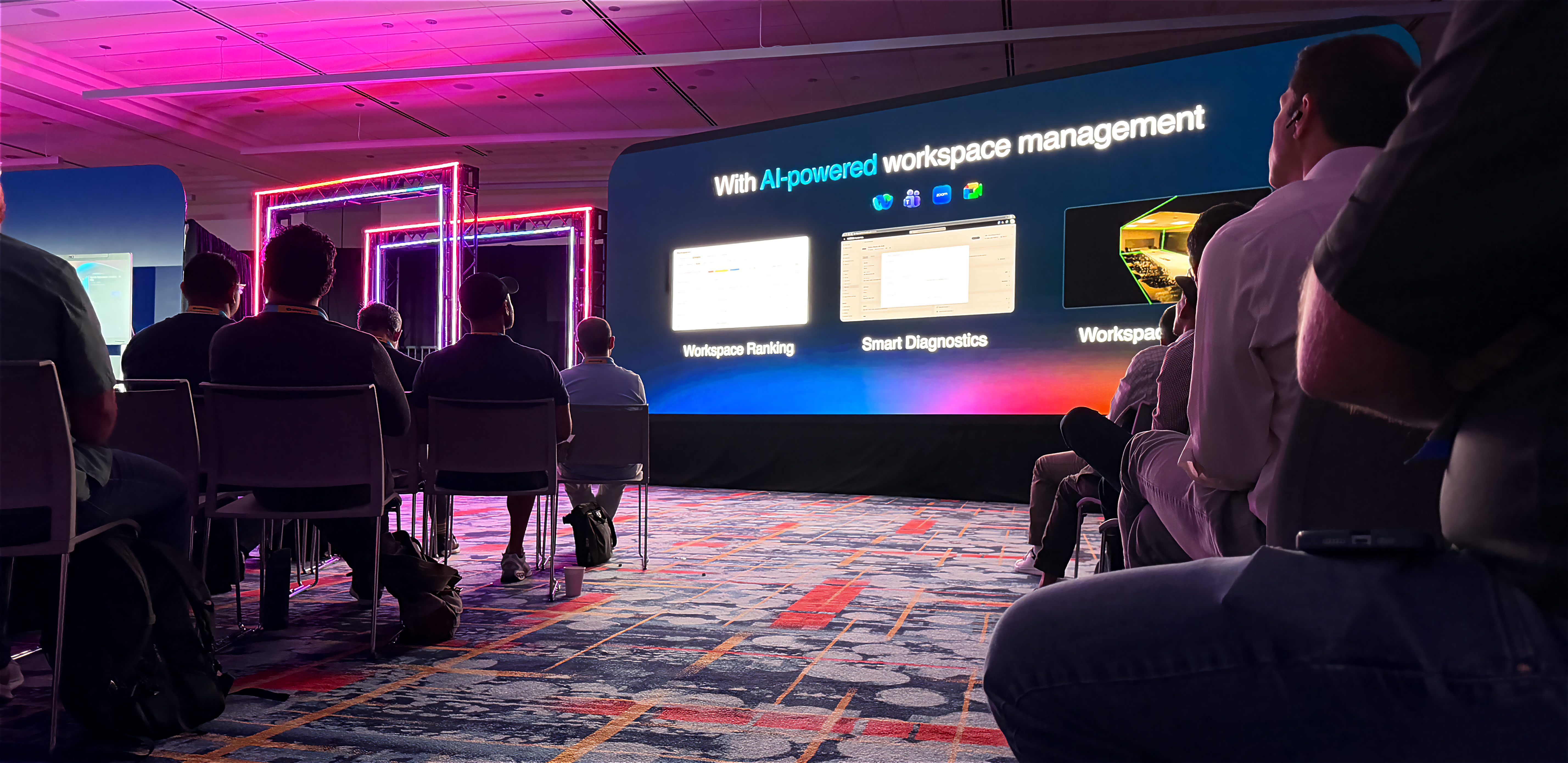
AI was easily the most discussed topic throughout the conference. While many conversations focused on automation, one idea from Microsoft’s Ilya Bukshteyn stood out because it reframed the discussion.
“AI eliminates the blank page. It’s not the end point, it’s the starting point.”
That idea resonates with us because it reflects how we are beginning to use AI in practice.
Rather than replacing expertise, AI accelerates it. It gathers information, creates a starting point, and removes the friction of beginning. The real value still comes from the people applying judgment, creativity, and experience to shape the outcome. It’s a subtle distinction, but an important one.
Looking Ahead
If there was one takeaway from InfoComm 2026, it’s that success will no longer be defined by individual products or isolated AI features.
It will be defined by how well organizations connect technology, people, and experiences into systems that feel seamless.
The winners will be the ones creating the most cohesive ecosystems, where AI supports people, partnerships strengthen solutions, and technology fades into the background.
That’s the future we saw at InfoComm and the future we are excited to help shape.